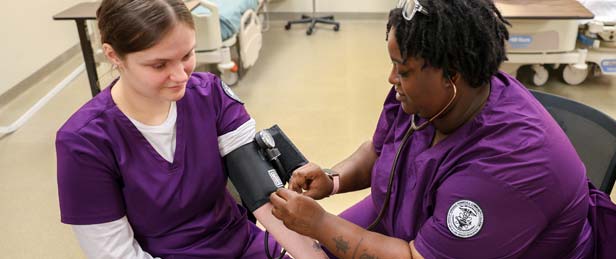
Public Notice of Upcoming Accreditation Review Visit by ACEN Virginia Peninsula Community College wishes to announce that it will host a site visit for continuing accreditation of its Professional Nursing-RN nursing program by the Accreditation Commission for Education in Nursing (ACEN). You are invited to meet with the site visit […]
On Oct. 6, join VPCC’s Gator Pathway Success (GPS) coaching team for National Coaches Day. The annual observance honors the mentors, volunteers, and leaders who guide athletes and students. Visit the team to learn more about how our GPS coaches connect you to campus resources and help you build academic […]
Join us on the Hampton Campus for our Fall Fest – Health and Wellness Fair! Fun for all ages, it’ll feature games, music, and lunch. Explore information tables from community service agencies and connect with VPCC clubs & organizations. Celebrate the season with us! Thursday, Oct. 8, 2026 12 – […]
The VPCC Natural Science & Engineering Student Association proudly hosts a tour of William & Mary’s Batten School of Coastal and Marine Science & Virginia Institute of Marine Science (VIMS). The tour will feature various labs and engineering facilities at VIMS, including state-of-the-art labs in its new Chesapeake Bay Hall […]
A free sports and TCG card event hosted at Virginia Peninsula Community College’s Hampton Campus on October 10, 2026. Proceeds of this event will go to supporting Gator Athletics here at VPCC. More details are available at the official Hampton Collectors Expo website. Event brought to you by a partnership […]
Are you interested in a healthcare career? What if you are eligible at no cost to you? Our Introduction to Healthcare Boot Camp runs Mondays and Thursdays, Oct. 12-Dec. 10. Presented by VPCC’s Road to Success (RSVP) program in partnership with the Peninsula Regional Education (PREP) program, virtual sessions are […]
Join VPCC’s Military & Veteran Services Tuesday, Oct. 13, as we celebrate the U.S. Navy’s 251st birthday. Stop by our Hampton Campus office in Kecoughtan Hall, Room 253 and grab a slice of cake while supplies last. First come, first served! Celebrate with us!
Join us on Oct. 13 for an informative workshop, AI New Reality. Expert speakers representing education, business, law enforcement and other sectors will explore cyberscams, data protection and financial crime trends. Location: Peninsula Workforce Development Ctr. (600 College Drive, Hampton) Time: 8:30 – 9 a.m. morning bites and insights followed […]
Join us on the Historic Triangle Campus for our Fall Fest! All students are welcome to enjoy hot cocoa and tea. Ccelebrate the season with us! Tueaday, Oct. 13, 2026 12 – 2 p.m Commonwealth Room, (Room 110) 4601 Opportunity Way, Williamsburg Sponsors: Student Life & Leadership and Single Stop
Virginia Peninsula Community College Workforce Development Center is excited to announce a Job Fair for VPCC students and the local community. Job Opportunities in: Healthcare Information Technology Trades & Manufacturing Transportation (CDL) and MORE! Full-time & Part-time Positions At the event, you will have the opportunity to speak directly with […]
8-Week 1 Session: Final grades will be posted and available to students on the evening of Thursday, Oct. 15, 2026. For more information, visit our Academic Calendar.
Are you interested in a healthcare career? What if you are eligible at no cost to you? Our Introduction to Healthcare Boot Camp runs Mondays and Thursdays, Oct. 12-Dec. 10. Presented by VPCC’s Road to Success (RSVP) program in partnership with the Peninsula Regional Education (PREP) program, virtual sessions are […]
Gators, fuel your Thursday throughout October! The Chaos and Caffeine food truck will be on the Hampton Campus from 11 a.m to 1 p.m. on Oct. 15, 22 & 29 in front of Hastings Hall.
8-Week 2 Session: Classes will begin on Friday, Oct. 16, 2026, and students should be enrolled and prepared to start. For more information, visit our Academic Calendar.
The VPCC Library presents a Poetry Workshop featuring VCCS Poet Laureate Connor Mancuso. Join us for Narrative Poetic Prose that Moves, a craft workshop for writers who love lyrical language but don’t want to lose clarity, momentum or emotional impact. It’s free and open to the public! Sign up here […]
The Gators finish the home portion of their schedule with a tri-match against Cheyney and Region 10 foe Patrick & Henry. The match against Cheyney will start at 10 a.m., and the match against P&H will start at approximately 2 p.m.
Spring Priority Registration Begins starts on Monday, Oct. 19, 2026, and students should register early to secure preferred classes — this includes Military Affiliated Students. For more information, visit our Academic Calendar.
Are you interested in a healthcare career? What if you are eligible at no cost to you? Our Introduction to Healthcare Boot Camp runs Mondays and Thursdays, Oct. 12-Dec. 10. Presented by VPCC’s Road to Success (RSVP) program in partnership with the Peninsula Regional Education (PREP) program, virtual sessions are […]
STUDENTS: You’re invited to our TRANSFER FAIR on Oct. 21! Starting at the Historic Triangle Campus in Williamsburg from 9 – 11 a.m. Later at the Hampton Campus, the fair runs 1 – 3 p.m. at the Kecoughtan Hall Gallery. Join us and talk to representatives from the four-year school […]
STUDENTS: You’re invited to our TRANSFER FAIR Oct. 21 featuring more than 30 four-year schools! The fair runs 9 to 11 a.m. at the Historic Triangle Campus in Williamsburg and 1 to 3 p.m. at our Hampton Campus in the Kecoughtan Hall Gallery. Join us and talk to representatives from […]
Are you interested in a healthcare career? What if you are eligible at no cost to you? Our Introduction to Healthcare Boot Camp runs Mondays and Thursdays, Oct. 12-Dec. 10. Presented by VPCC’s Road to Success (RSVP) program in partnership with the Peninsula Regional Education (PREP) program, virtual sessions are […]
Gators, fuel your Thursday throughout October! The Chaos and Caffeine food truck will be on the Hampton Campus from 11 a.m to 1 p.m. on Oct. 15, 22 & 29 in front of Hastings Hall.
For our 8-Week 2 Session, the last day to drop for a refund is Friday, Oct. 23, 2026. Please refer to our Academic Calendar for additional information.
The Gators will honor their sophomores in a pre-game ceremony. They will then close out the regular season with a non-conference match against the Mustangs.
Spring Open Registration Begins starts on Monday, Oct. 26, 2026, and students should register early to secure preferred classes. For more information, visit our Academic Calendar.
16-Week Session: The deadline to withdraw from classes with a grade of ‘W’ is Monday, Oct. 26, 2026. For more information, visit our Academic Calendar.
VPCC is proud to recognize National Day of the Deployed. It’s observed each year on Oct. 26 to honor U.S. military members deployed worldwide and acknowledge the families who support them while they are away. Students, faculty, and staff can visit Military & Veteran Services on the Hampton Campus in […]
Are you interested in a healthcare career? What if you are eligible at no cost to you? Our Introduction to Healthcare Boot Camp runs Mondays and Thursdays, Oct. 12-Dec. 10. Presented by VPCC’s Road to Success (RSVP) program in partnership with the Peninsula Regional Education (PREP) program, virtual sessions are […]
Are you interested in a healthcare career? What if you are eligible at no cost to you? Our Introduction to Healthcare Boot Camp runs Mondays and Thursdays, Oct. 12-Dec. 10. Presented by VPCC’s Road to Success (RSVP) program in partnership with the Peninsula Regional Education (PREP) program, virtual sessions are […]
Gators, fuel your Thursday throughout October! The Chaos and Caffeine food truck will be on the Hampton Campus from 11 a.m to 1 p.m. on Oct. 15, 22 & 29 in front of Hastings Hall.
All VPCC students, faculty, staff and families are welcome for an evening fun for a cause! Join us on Oct. 30 for Trunk or Treat, a fun, family-friendly evening of candy and costumes that supports our campus Food Pantry! Whether you wear a costume or not, you’re invited and, we […]