
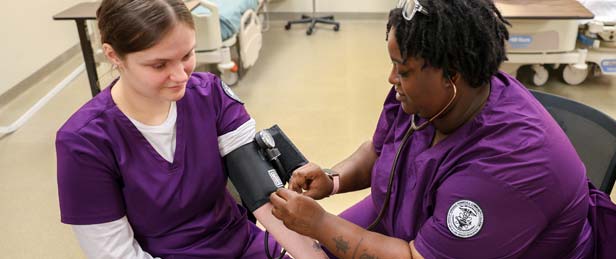
Student cohorts have been used to great success in Virginia Peninsula Community College’s Emergency Medical Services and nursing programs. The College’s Early Childhood and Human Services programs are hoping for the same with their fledgling cohorts.
Early Childhood recently completed its second year of summer cohorts, and Human Services held its first. Strong foundations have been set in each program.
Teresa Frazier, chair of Early Childhood Education program, said it was a good sign most of the students in her cohort wanted to continue with the program and made the commitment for another year. Keisha Samuels, chair of the Human Services program, said: “The sole fact that we have completers, I think that is success.”
Industry studies show cohorts work, said J.J. Bonavita, director of Institutional Research at the College.
“They have higher retention rates, higher completion rates,” he said. “The numbers prove it’s working.”
Sixteen students in the Early Childhood program earned 16 credits in a 10-week span to earn a Career Studies Certificate (CSC) in Early Childhood Development. Classes were held at the new VPCC Center for Excellence in Early Childhood Development in Newport News and online.
The students will continue taking classes in fall 2025, spring 2026 and summer 2026. They will have earned an associate degree in Early Childhood Education by the end of next summer. That’s two years. Students on a traditional schedule take three or four years to complete their coursework.
That shortened time frame didn’t adversely affect the work produced by the students.
“They worked really hard to get done that quickly,” Frazier said. “They did great.”
The Human Services program is set up differently and isn’t a cohort in the traditional sense. With Early Childhood, the students will take the same classes in the remaining semesters as they earn an associate degree. In the College’s Human Services program, students have three options: an associate degree in Human Services and career studies certificates (CSC) in substance abuse or benefits. The benefits CSC was the pilot program this summer.
“They took all benefits classes and then they’ll continue on into one of these other programs,” Samuels said. “They’re not a cohort, per se, but a lot of the same people that were in their class this summer will be the same students that are in their class in the fall.”
The Human Services students took five classes (15 credit hours) in five weeks, but they weren’t the only ones putting in hard work.
“Making the schedule was a lot of work because it’s not an accordion,” Samuels said of making fitting classes into a condensed schedule. “You have to rewrite the way that you’re delivering the curriculum so that students have mastery. We had some data to support five-week deliveries being successful.”
Knowing the Early Childhood Education program was successful gave Samuels and her staff a boost of confidence. Fifteen students completed the summer Human Services program and are on track to earn an associate degree next summer. Again, that is ahead of schedule.
“Traditionally, if they have finished a benefit CSC, then they probably should have two more (semesters), at the max three,” Samuels said.
Students appreciate the accelerated schedule, even though it’s more intense.
Human Services student Chantera Ross is a mother of 10, full-time doula and a substitute teacher for Hampton City Schools.
“I like that I’ll be able to graduate with my degree, but also certificates,” she said. “On top of that, I really liked the classes.”
She should earn her associate degree next spring instead of next fall.
Lovelle Coley, who is in the Early Childhood program, works full time as a registered behavior technician and is a single mom of two. By the time she graduates in August 2026, she will have earned two CSCs and an associate degree.
“That’s a much quicker time span than I would have thought,” she said. “This will be huge because I’ll be the first woman in my family to get a degree.”
Bonavita noted the cohort aspect promotes a sense of camaraderie. Ross and Coley agreed, saying it has motivated them.
“I am a hands-on learner, so being able to have the discussions, being able to get to know some of the people that I would potentially be working with in this community was great for me to help me navigate the space,” Ross said. “We did study groups where we would text each other if we had issues, or we would talk. The people that I had in the class were amazing. We were able to network with each other to be able to help each other through the course.”
Coley said the cohort aspect was one of the biggest benefits for her.
“We promised each other. We told each other we were going to hold each other accountable. We were going to be accountability partners,” she said.
Normally, Coley is reserved and prefers to keep to herself, but that changes when she gets to class and sees the other members of her cohort.
“Once I walk in the room and I see they’re there, it’s like, ‘OK, we’re here. We got this. We’re doing this,’” Coley said. “It feels like you have a support system present. I really like that.”
Rochelle Pleasant, an adjunct faculty member in the Early Childhood Education program, is a big proponent of cohorts. She wasn’t in one while attending VPCC, but was part of one in graduate school.
“It was so beneficial,” she said. “Everybody’s in the same class at the same time. The people that are in the class with you can explain the material to you or maybe discuss things that they’d be hesitant to ask an instructor.”
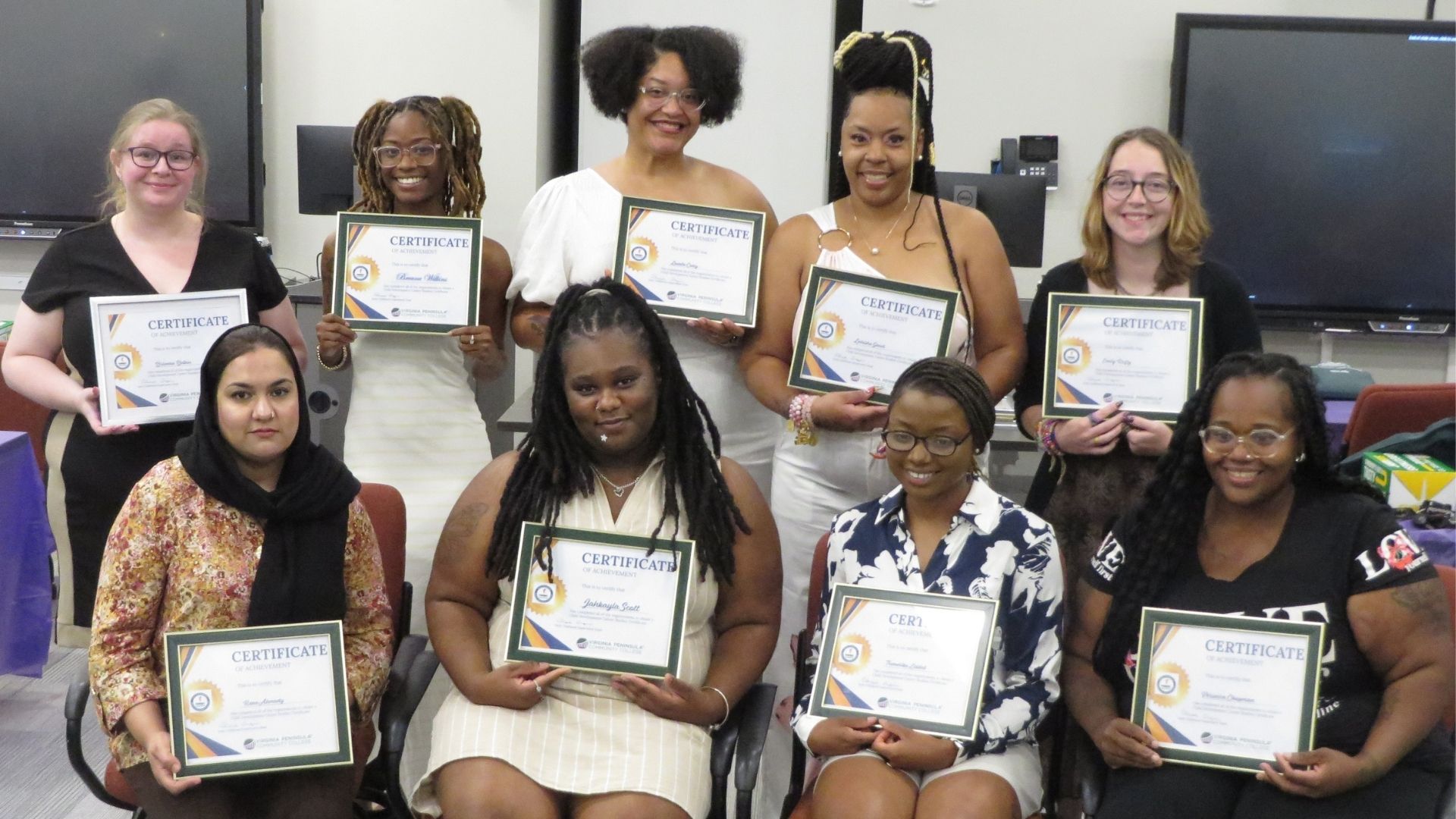
That camaraderie was evident, Frazier said, when the Early Childhood cohort held a celebration at the end of their summer classes.
“They were all hugging each other and all dressed up,” she said.
Both programs had been in the planning stages for several years, and the leaders involved said these programs are responding to a community need by producing quality graduates in an accelerated period.
“From what I’m getting from my advisory board, the need is in the community,” Samuels said.
In the past few years, directors of area childcare centers have had difficulties hiring, Pleasant said this program will provide those directors with qualified, well-trained candidates.
“That’s why we’re excited about all this that’s happening in our building,” she said.